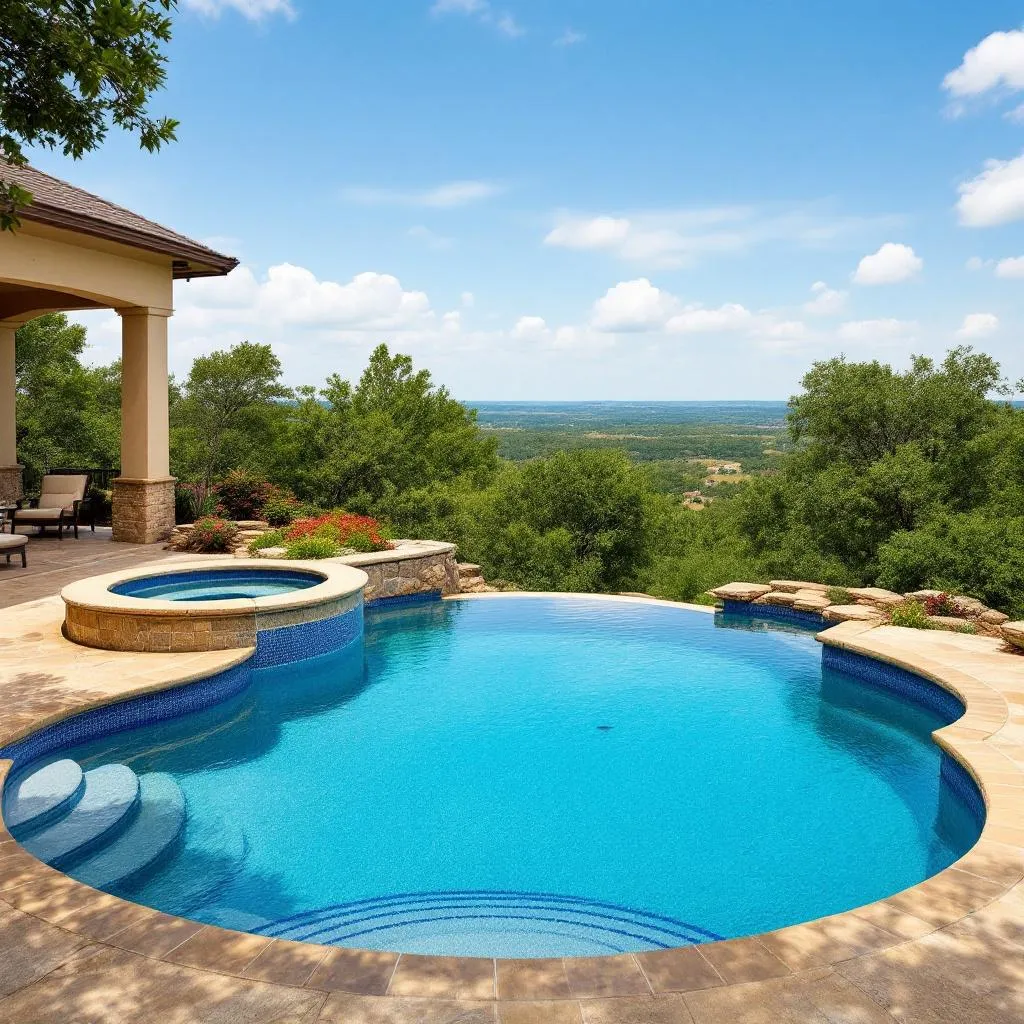
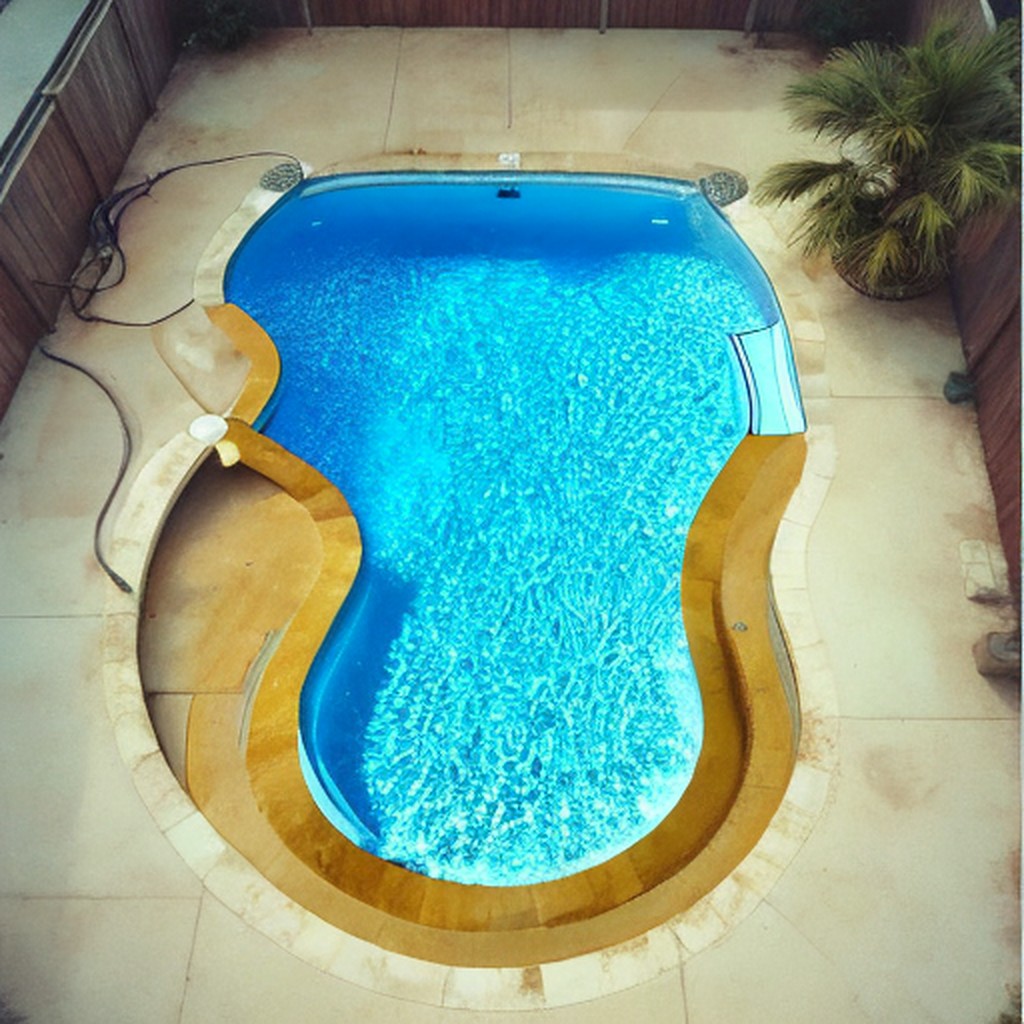
San Antonio's pool stock is aging. Thousands of Bexar County pools built in the 1970s, '80s, and '90s are reaching the end of their original design life — not because they can't be fixed, but because a piecemeal approach of resurfacing and patching no longer makes financial sense. A full renovation replaces the surface, tile, coping, decking, and equipment in one coordinated project that adds 20+ years of life and dramatically improves the look and function of the pool.
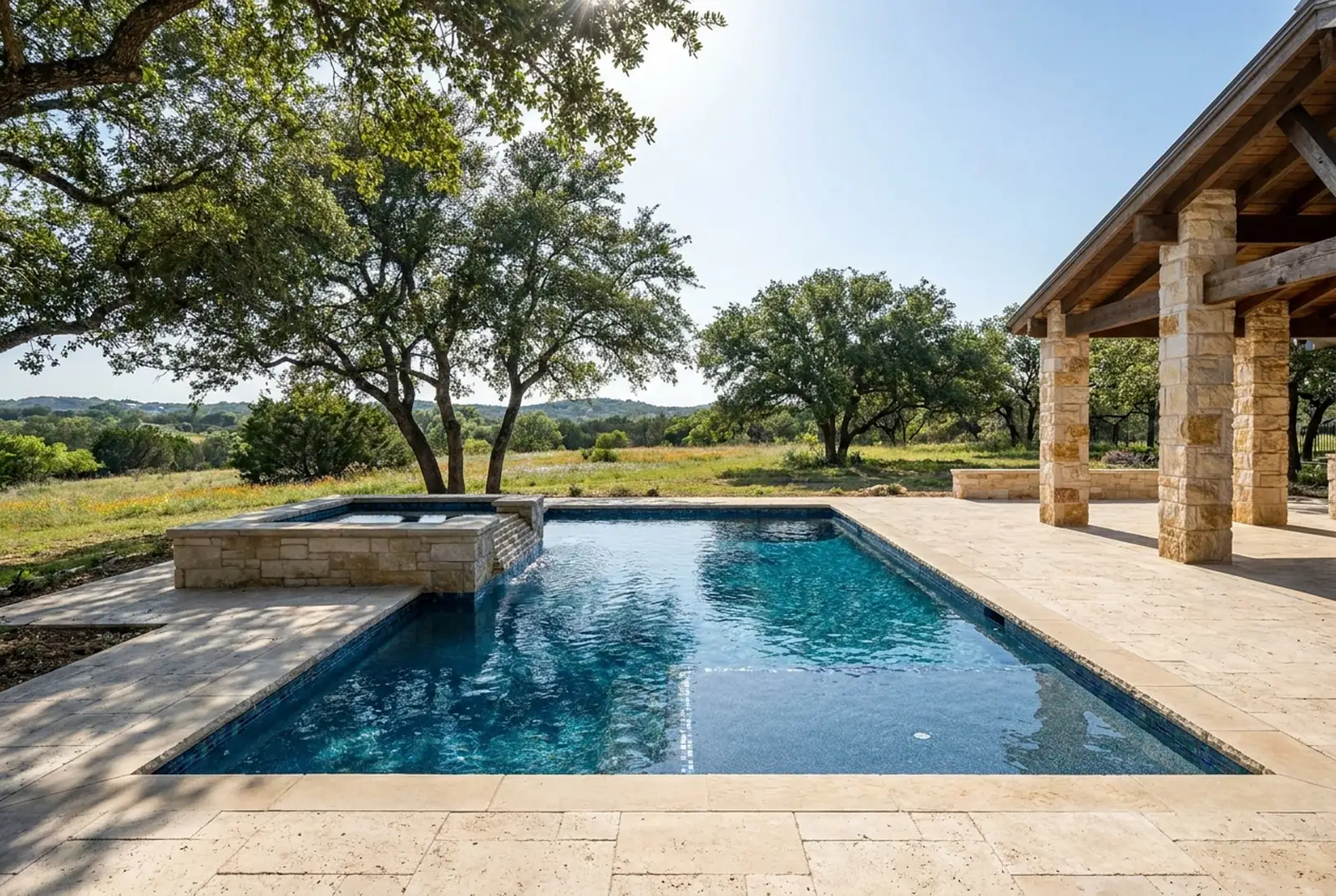
Resurface vs. Renovate
Resurfacing makes sense when the shell is structurally sound and the rest of the pool — tile, coping, decking, equipment — is in reasonable shape. But when multiple systems are failing at once, resurfacing the interior while leaving deteriorating tile and a cracked deck doesn't restore the pool. It just defers the rest of the bill. Here are the signals that a full renovation is the smarter investment:
Calcium-scaled waterline tile and cracked or heaving coping around the pool perimeter. A new surface with old coping looks wrong and the coping gap leak continues regardless of what's on the interior.
San Antonio's limestone subsoil and Edwards Aquifer fluctuations cause decking to heave and crack over time. A sunken, cracked deck is a liability — and it undercuts the value of interior work.
Pump, filter, heater, and automation systems over 10 years old are approaching end of life. Replacing them during renovation (not mid-season as an emergency) saves money and prevents downtime.
Square 1980s builder pools, dated tile patterns, and undersized shallow ends. A renovation can reshape benches, add tanning ledges, update lighting, and modernize the look completely.
If two or more of these apply to your pool, the math usually favors a coordinated renovation over sequential individual repairs. We help you build a phased plan that makes sense for your budget.
What's Included
We drain the pool and do a full structural inspection — shell, plumbing lines, light niches, and fittings. Every crack is categorized: surface-only, structural, or active. You get a complete written assessment before any scope is finalized.
Old surface material is removed to bare concrete. Structural cracks are chased, cleaned, and filled with hydraulic cement or epoxy injection. Active cracks in San Antonio's limestone-shift zones are stapled for long-term stability before any new surface goes on.
Your choice of plaster, quartz aggregate, or pebble finish — applied by our own crew, not subcontractors. We oversee application through the startup chemistry protocol, calibrated for San Antonio's Edwards Aquifer water hardness.
Waterline tile and pool coping are replaced to complement the new surface. Options include porcelain, glass mosaic, travertine, and flagstone. Coping is set with proper slope for drainage and a clean visual edge.
Cracked or sunken concrete decking is addressed — either by lifting, resurfacing with a cool-deck coating, or full replacement. We also handle travertine, flagstone, and pavers for homeowners upgrading the entire outdoor aesthetic.
During a renovation is the best time to upgrade equipment: variable-speed pump, new filter, LED lighting, automation system, or heater. Installing equipment while the pool is already drained and crews are on site eliminates redundant labor costs.
Investment
Pool renovation scope varies widely, so cost ranges are wide too. Here's how a typical San Antonio renovation breaks down by component:
A mid-range full renovation, with a new quartz surface, tile, coping, and deck resurfacing, typically runs $14,500 to $32,000 for a standard Bexar County residential pool. Premium finishes, full deck replacement, and equipment packages push into the $30,000 to $45,000 range.
We don't quote renovation projects without an on-site inspection. The estimate is free, written, and itemized by component — so you can choose what to include and what to phase.
San Antonio Specifics
San Antonio's renovation demand is higher than most Texas markets for three connected reasons:
Edwards Aquifer calcium hardness of 200–350 mg/L accelerates scale buildup on tile and plaster deterioration. Pools here need more frequent attention than pools in softer-water markets like Austin or Houston.
SA's 8-month swim season means more chemical cycles per year, more UV exposure, and more thermal stress than northern markets. A pool here works harder — and shows it sooner.
Caliche and limestone subsoils shrink and expand with SA's wet/dry cycles, causing deck heaving and shell cracking at rates higher than Houston's clay. Structural crack repair is more common here.
Common Questions
A complete renovation — surface, tile, coping, and deck — typically takes 2–4 weeks depending on scope and material lead times. Equipment-only jobs or surface-only resurfacing run 5–10 days. We give you a project timeline in writing before work begins so you can plan around it.
If the shell is structurally sound and the pool shape and size still work for you, renovation is almost always the better value — you're paying to update, not to pour new concrete. New construction makes more sense when the existing pool is structurally compromised, severely undersized, or you want a fundamentally different layout. We'll tell you honestly which direction makes financial sense after the inspection.
Yes. We help homeowners plan phased renovations — typically starting with the interior surface, then tile and coping in year two, then decking when the budget allows. A written phased plan lets you prioritize by impact and budget without doing it all at once.
Resurfacing, tile, and coping work generally don't require a permit in San Antonio. Structural changes, new equipment, significant electrical work, and plumbing modifications do. We pull required permits and handle inspections as part of the renovation scope — you don't need to manage that yourself.
Complete the Transformation
The most common outcome after a pool renovation: the pool looks incredible, and the surrounding grass looks terrible. Chlorine splash-out, concentrated foot traffic through the project, and the general disruption of renovation work leaves natural grass in rough shape — and in San Antonio's heat and drought conditions, it rarely fully recovers.
Adding synthetic turf during the renovation project — not after — is the smarter sequence. The base excavation work happens alongside the deck work. The soil disturbance from the renovation project is cleaned up once, not twice. And the backyard is finished completely when the crew leaves, not six months later when you try to get the grass to come back.
Replace the lawn areas between the pool edge and the rest of the yard with synthetic turf that handles splash-out, foot traffic, and SA's summers without maintenance.
Complete backyard conversion — zero irrigation, zero mowing, year-round green appearance. Pays back operating costs within 3–5 years in eliminated maintenance alone.
A custom-shaped putting green is one of the most popular add-ons for homeowners doing a full backyard renovation. Installed as part of the same project scope.
 Alamo Pool