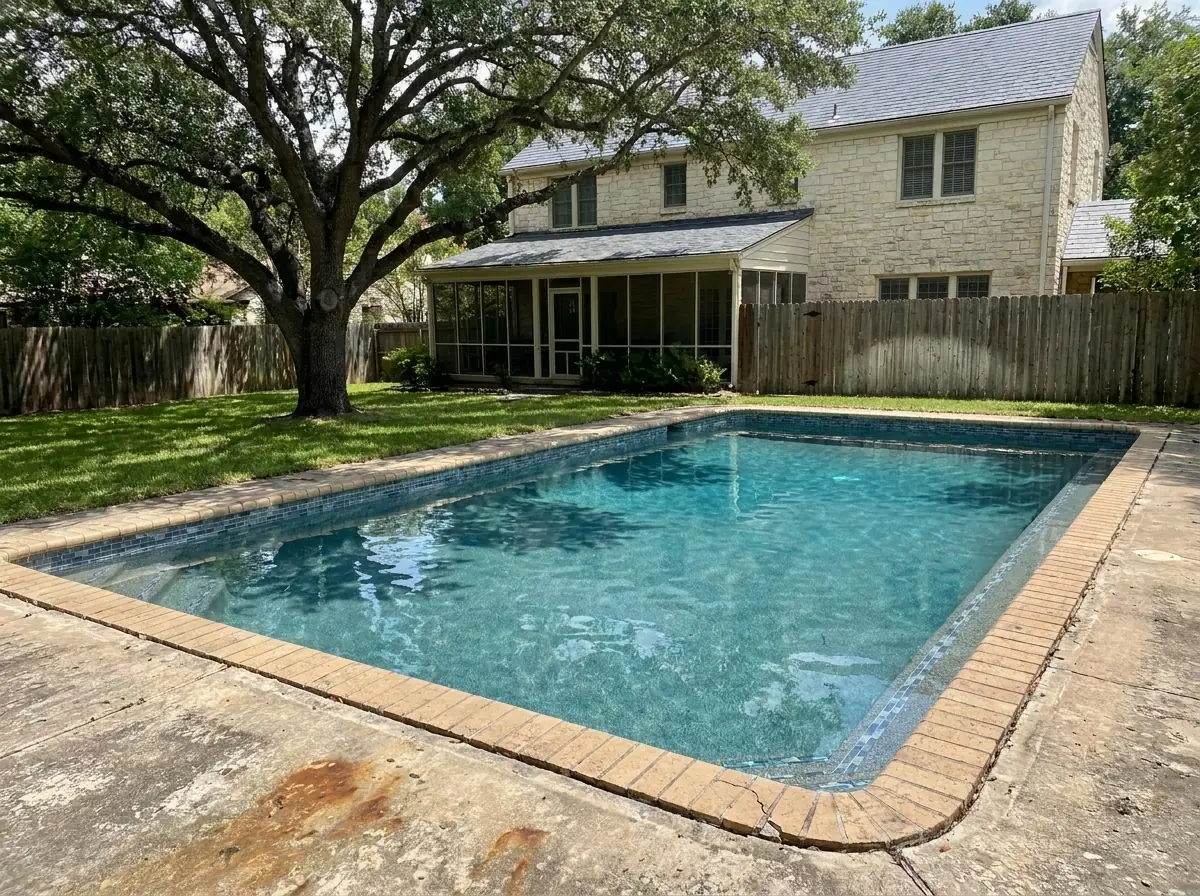
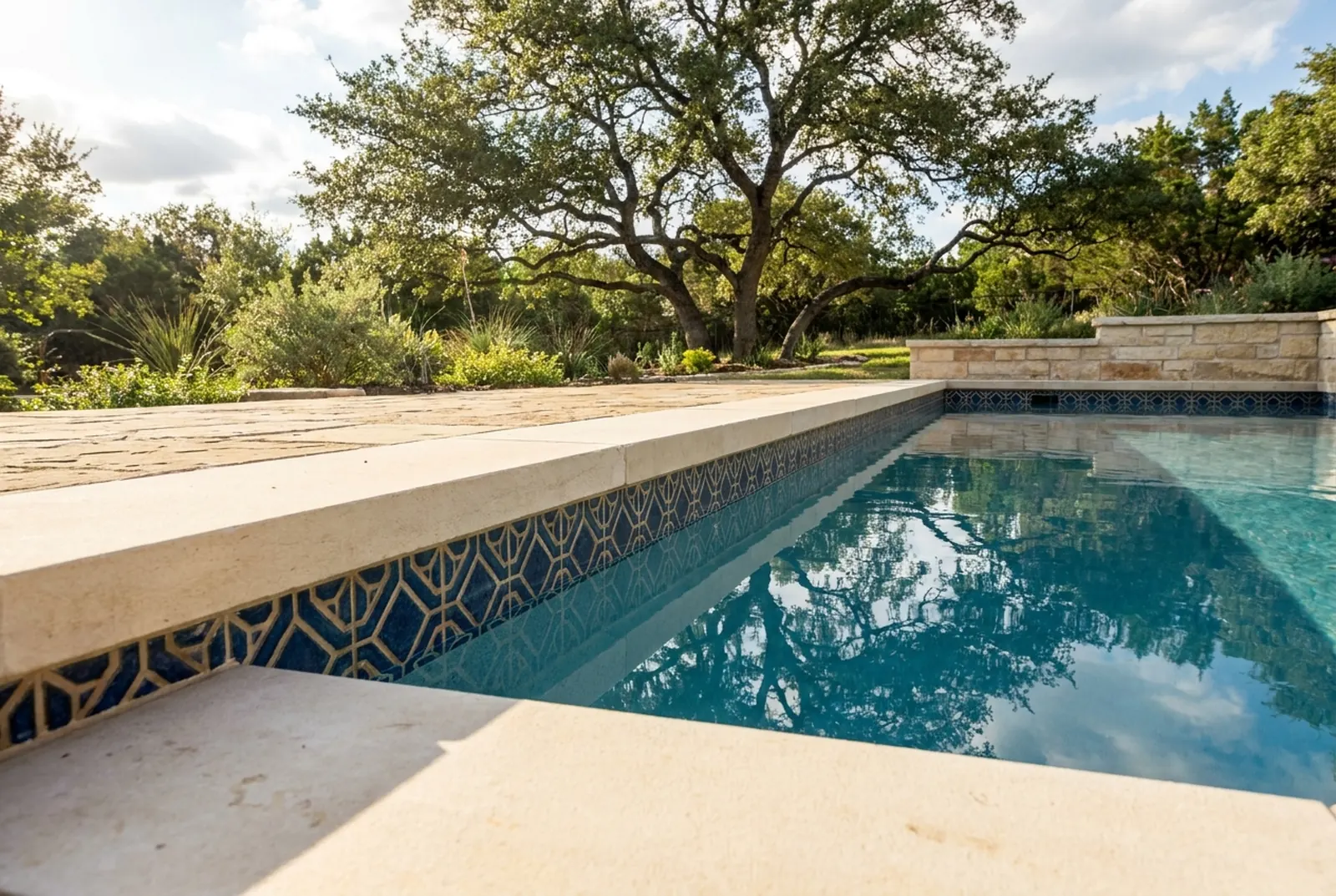
Pool tile repair covers waterline tile replacement, coping repair, grout restoration, and calcium scale removal. Most San Antonio homeowners notice it when tiles start popping off the bond beam — a direct result of San Antonio's hard water weakening the adhesive bond over years of thermal cycling and calcium scale buildup. Left alone, loose tile exposes the bond beam to water infiltration that leads to structural damage costing far more than a tile repair.
Don't Wait
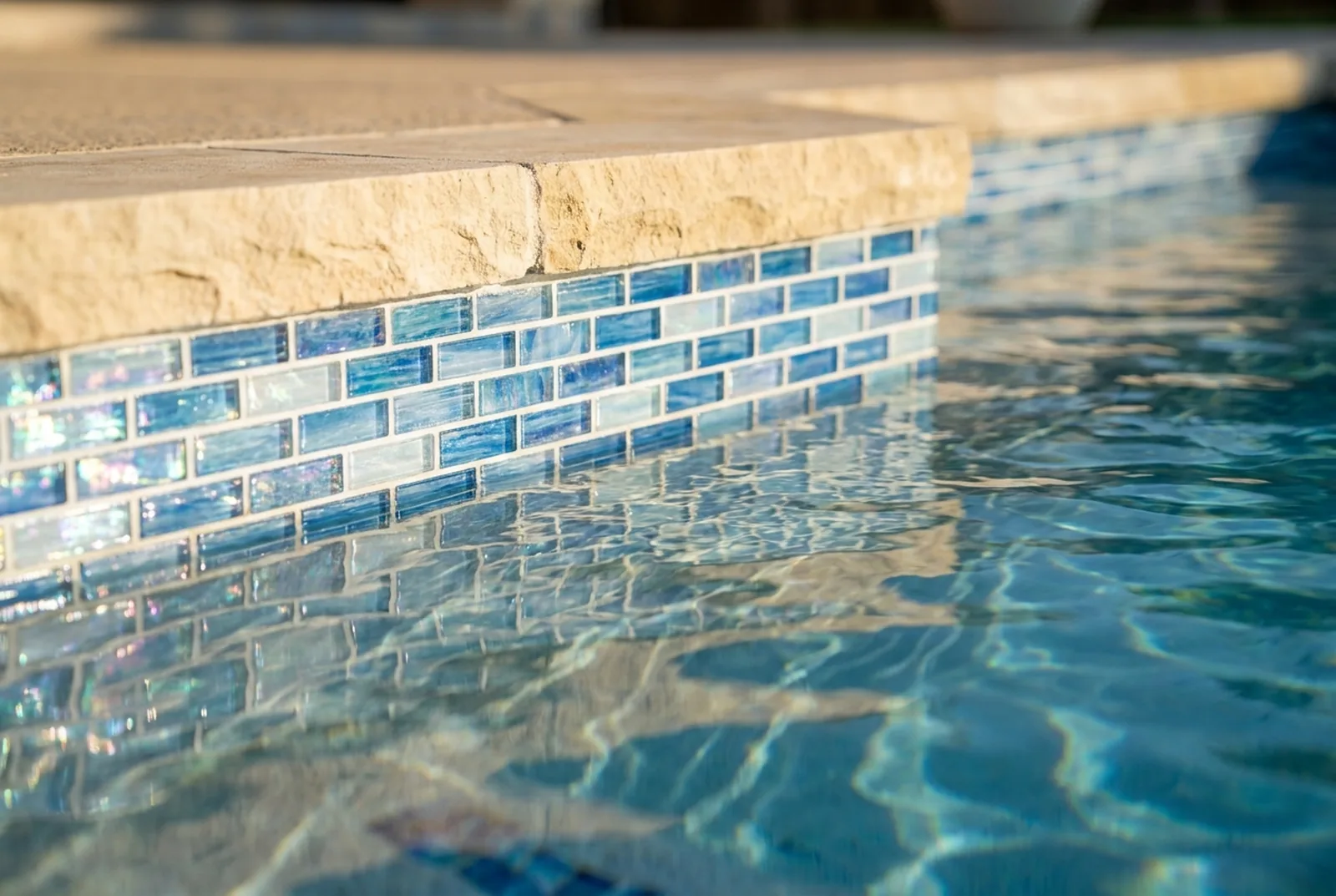
Tile problems have a way of looking cosmetic until they're not. The waterline tile band exists for a structural reason — it protects the bond beam from water infiltration. Once tiles start going, the exposure begins. Watch for these warning signs:
Tiles that fall off or loosen at the waterline are the most urgent sign. San Antonio's hard water deposits calcium under the tile adhesive, weakening the bond. Thermal cycling (hot days, cool nights) does the rest. Each missing tile is a direct water path to the bond beam.
The thick white crust at the waterline is calcium carbonate from the Edwards Aquifer. It's not just cosmetic — scale buildup under and behind tiles weakens adhesion. It also signals that water chemistry is running high in calcium or pH.
The coping stones around the pool's top edge take constant foot traffic, furniture weight, and UV exposure. Cracked or shifted coping lets water behind the pool shell — a leading cause of serious structural damage in Bexar County's expansive clay soils.
Crumbling or missing grout lines allow water to reach the tile adhesive layer directly. Once grout fails in multiple areas, re-grouting alone isn't enough — the tiles need to come off, the bond beam needs prep, and everything needs to be set correctly from scratch.
Our Process
We assess the extent of tile and coping damage, check the bond beam for water infiltration, and bring tile sample options for you to review. All at no charge. You'll also get an honest assessment of whether partial repair or full replacement makes more sense.
For waterline tile work, we lower the pool water to expose the tile band. Full perimeter tile or coping replacement requires a complete drain. We work efficiently to minimize time your pool is out of service.
Old tile and adhesive are removed, the bond beam is cleaned, and any water damage is addressed. A waterproof bonding layer is applied before any new tile is set. This prep step is what separates a 10-year tile job from one that starts failing in 3.
New tile is set with pool-grade adhesive and even spacing. Coping stones are set in mortar and sealed appropriately. The entire waterline is checked for level before grout is applied.
Pool-grade grout is applied and finished. We clean the new tile, refill to proper level, and do a final inspection. Your pool is typically swim-ready within 3–5 days of tile work completion.
What You Get
Investment
Pool tile repair in San Antonio typically runs $500 to $4,500 depending on the scope of work:
What drives cost: pool perimeter length, tile material selected (ceramic vs. glass vs. travertine), and whether the bond beam needs structural repair. We itemize everything in the free estimate — no surprises at invoice time.
Common Questions
In San Antonio, the most common cause is hard water calcium scale weakening the tile adhesive bond over time, combined with daily thermal cycling (100°F+ days, cooler nights) that stresses the tile-to-wall connection. Each cycle flexes the tile slightly. The permanent fix is full tile removal, bond beam prep, and resetting with pool-grade adhesive — not just gluing the tile back in place.
Partial repairs — fixing a few popped tiles — can sometimes be done by lowering the water level rather than fully draining. Full perimeter tile or coping replacement requires a complete drain. We'll tell you at the estimate which approach applies to your situation.
Partial repairs typically run 1–2 days. Full perimeter tile replacement runs 3–5 days including drain, demo, setting, and grouting. Add 1–2 days for refill. Most tile jobs are swim-ready within a week of start.
We need access to the pool and water at the start of the job. You don't need to be present during the work. We'll call with updates and let you know when refill is complete.
 Alamo Pool