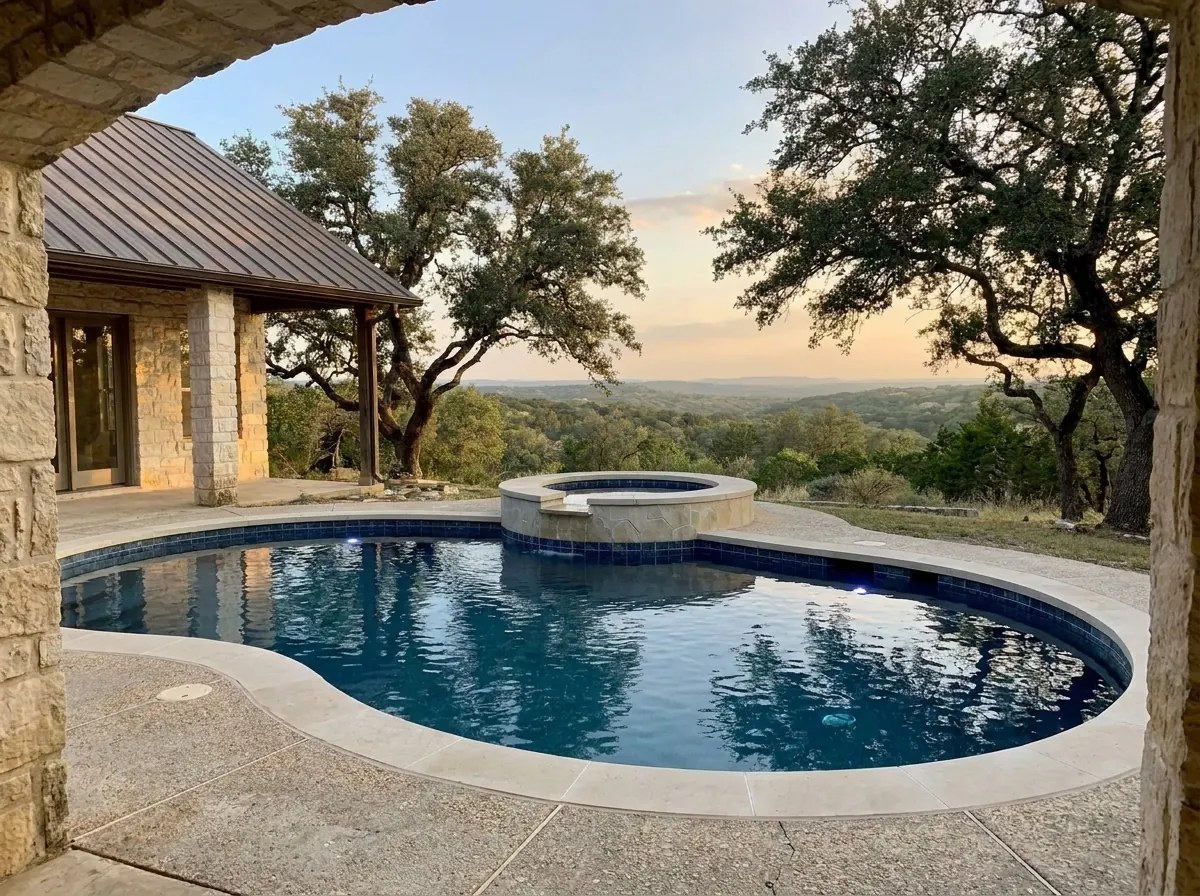
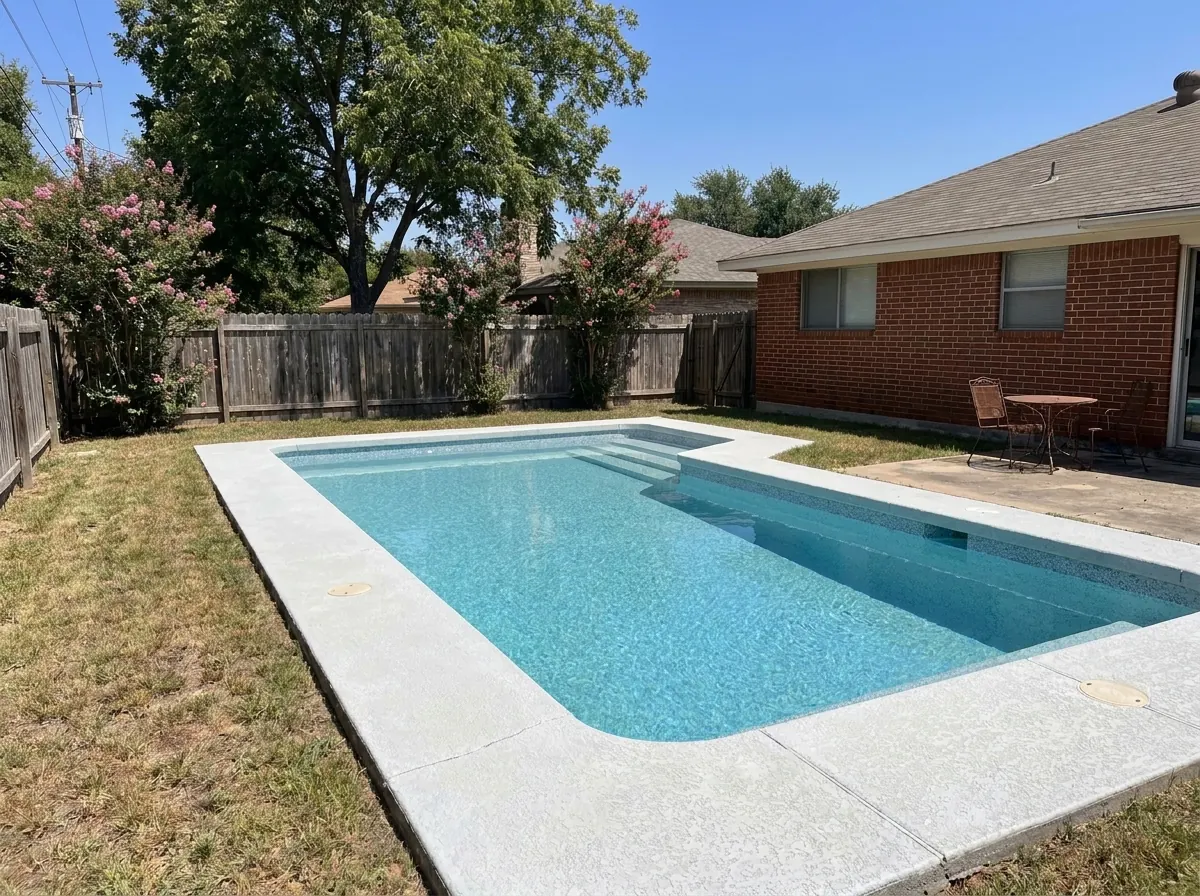
Pool resurfacing strips the old, degraded interior finish and replaces it with a fresh surface that's smooth, waterproof, and built for the Texas climate. Most San Antonio homeowners need it when the plaster hits the 10–15 year mark and starts showing staining, roughness, or chipping that no amount of chemistry will fix. Done right, a new surface lasts another 10–25 years. Done wrong or skipped too long, you're looking at structural damage that costs far more to repair.
Is It Time?
Pool plaster doesn't fail all at once — it deteriorates gradually, and most homeowners manage the symptoms for 2–3 seasons before addressing the actual cause. Here's what a failing surface looks like in San Antonio:
Plaster that scratches feet or snags swimsuits isn't just uncomfortable — it means the surface has eroded and is now porous. Chemicals absorb into the wall instead of staying in the water.
Brown, gray, or black stains that return after brushing or acid washing signal that the plaster is absorbing contaminants rather than resisting them. The surface has reached end of life.
If algae returns every few weeks regardless of chemistry, the porous plaster is harboring it. You can't shock your way out of a substrate problem.
Plaster chips and flakes travel through the pump and filter. Left unaddressed, they cause equipment wear and eventually expose the concrete shell to direct water contact.
San Antonio's alkaline water (Edwards Aquifer calcium hardness typically runs 200–350 mg/L) accelerates surface breakdown faster than softer-water markets. If your pool is 10+ years old and showing any of these signs, the surface — not your chemistry routine — is the problem.
Step-by-Step
A technician visits your home, inspects the surface condition, checks for structural cracks, evaluates the tile and coping, and gives you a written estimate. No charge, no obligation.
The pool is drained and the old surface is chipped or blasted away to bare concrete shell. All equipment is protected throughout this process.
Structural cracks are chased, cleaned, and filled with repair materials rated for San Antonio's limestone soil movement. Hairline cracks are sealed with bonding agents before the new surface goes on.
Your chosen finish — plaster, quartz aggregate, or pebble — is hand-applied to the correct thickness by our experienced crew. Smooth, even finishing technique is critical and can't be rushed.
We fill the pool immediately after application and begin the startup protocol — daily brushing and water balancing calibrated for San Antonio's hard water for the first 7–10 days. This step determines how long the new surface lasts.
What You Get
Investment
Pool resurfacing in San Antonio runs $5,000 to $18,000 for a standard residential pool, depending on finish type and whether structural repairs are needed:
Crack repairs, tile replacement, and coping work are priced separately and itemized in your free estimate. We don't quote without inspecting first — so the number you get is accurate, not a guess.
Common Questions
No. We need access to the pool and utilities at the start, but you don't need to be present during the work itself. We'll communicate updates and let you know when the fill and startup phase begins — that's when we walk you through the 30-day break-in process.
Most San Antonio pool resurfacing projects take 5–10 days from drain to swim-ready: 1–2 days for prep and crack repair, 1–2 days for surface application, and 3–7 days for fill and startup chemistry. Pebble finishes add a day over plaster. The full 30-day break-in before heavy use is a surface-curing requirement, not a scheduling issue.
Pebble aggregate finishes last longest — typically 15–25 years. They're the most resistant to San Antonio's hard water calcium scaling and UV exposure. Quartz aggregate runs 12–18 years. Standard plaster lasts 8–12 years with attentive chemistry, and less if calcium hardness isn't managed closely.
Surface wear and degradation over time is generally not covered — it's a maintenance issue, not a sudden loss. If resurfacing is needed due to a covered event (like a tree falling on the pool), that's a different claim. When in doubt, call your insurer before the estimate. We can provide documentation if needed.
 Alamo Pool