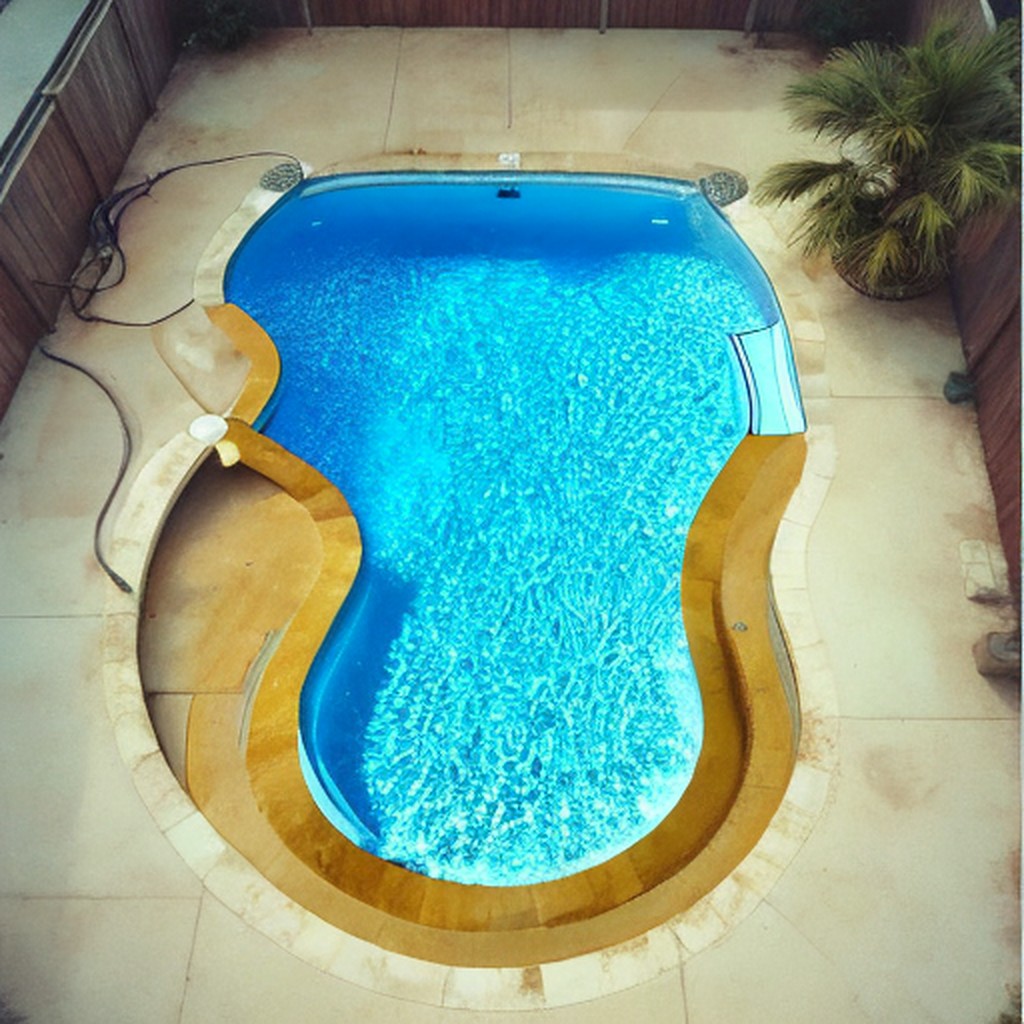
A pool that's designed for your specific property — not a catalog template dropped into it — costs the same to build and performs better for decades. San Antonio's terrain is diverse: flat suburban lots in Schertz and Converse, sloped limestone bluffs in Helotes, narrow Hill Country builds in Boerne and Bulverde. Good design starts by understanding what you're working with, then creating a pool that belongs there.
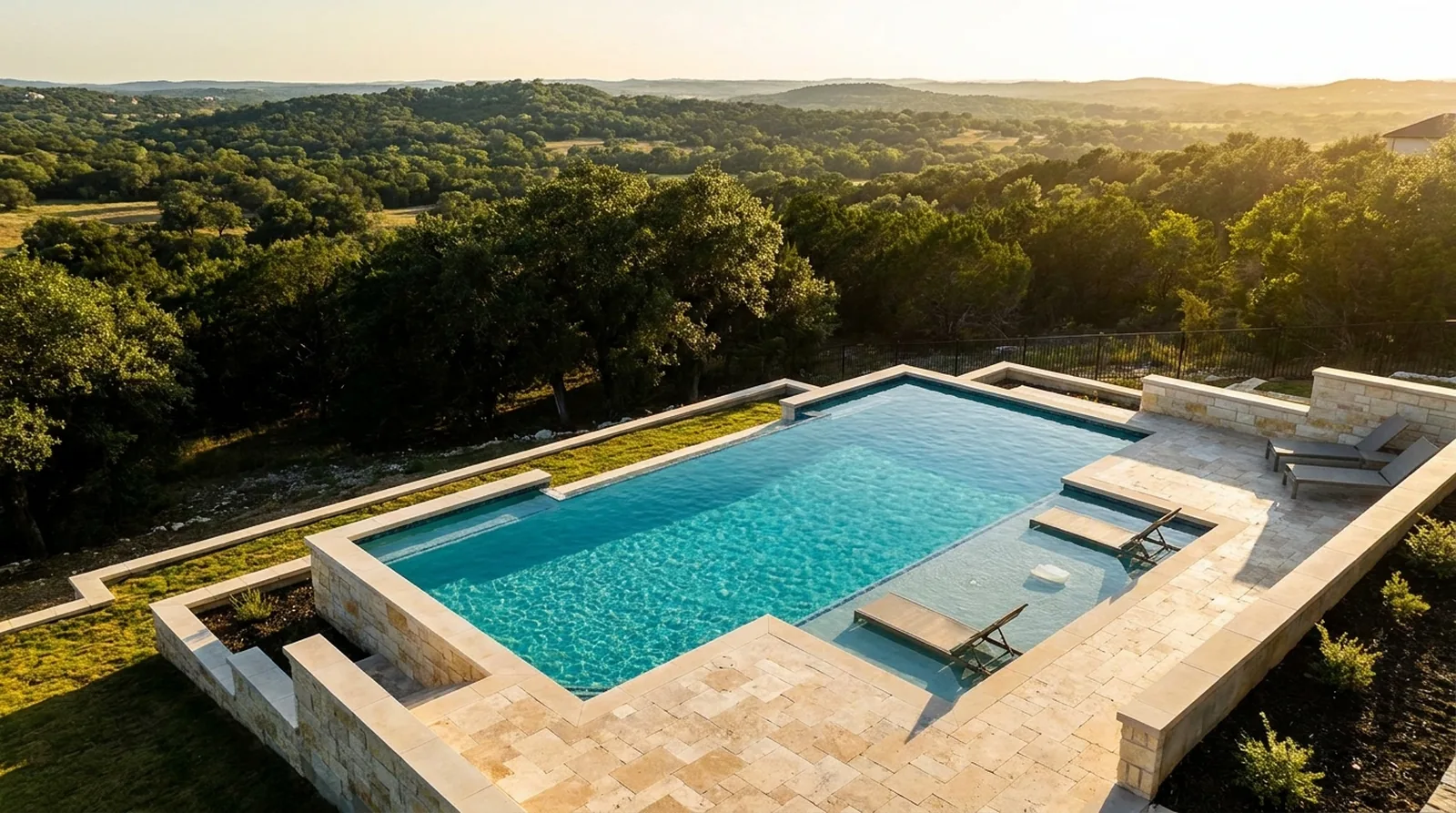
What Design Includes
Every build starts with a design consultation — not a sales call. We visit the lot, take measurements and grade surveys, and then develop a design that accounts for how you want to use the pool, your home's architecture, and the practical realities of your property.
Lot grade survey, setback measurement, utility marking, soil assessment, and drainage evaluation before any design is drawn. The site dictates what's possible; we figure that out first.
Digital 3D renderings showing the finished pool from multiple angles, positioned on your actual lot. You see exactly what you're building before we break ground — not just a 2D blueprint.
Bench placement, tanning ledge depth, diving zone radius, shallow-end entry slope. Every dimension serves a purpose. We design around how your family actually uses a pool.
Interior surface, waterline tile, coping material, and deck finish are selected together — not independently — so the finished product looks cohesive. We bring material samples to the design meeting.
Spillover spas, deck jets, scuppers, laminar jets, grottos, and waterfall features. We design water feature plumbing into the pool from the start, not as an add-on that gets value-engineered out during construction.
Outdoor kitchen placement, shade structure siting, landscape lighting, and fire feature positioning — designed as part of the pool plan, not figured out separately after the pool is done.
Pool Styles
Freeform shapes, boulders and rock features, pebble aggregate surfaces, and travertine or flagstone decking that mirrors the landscape. Popular in Boerne, Helotes, and Bulverde builds.
Clean rectangles, zero-entry beach edges, and sharp coping lines. Pairs with contemporary architecture and typically uses quartz or glass tile finishes with concrete or travertine decking.
Infinity edges, deck-level spa with vanishing edge, water features, fire bowls, and outdoor kitchen integration. Designed to entertain. Full outdoor living environment, not just a pool.
Tanning ledge at 6–9 inches for toddlers, graduated depth from 0" to 3' to 5', jump zone, and bench seating built into the shell. Designed around 10 years of actual family use.
Narrow and deep, typically 40–65 feet with a resistance jet at one end. Often combined with a compact attached spa. Works on a lot that can't accommodate a traditional pool footprint.
Kidney or free-form shape with a separate spa, white plaster or light quartz finish, and standard concrete decking with cool-coat. The reliable, budget-efficient build that works anywhere.
SA-Specific Design Factors
Pool design that works in Florida or the Dallas suburbs doesn't automatically translate to San Antonio. Our design process accounts for local factors that generic templates miss:
SA's summer sun runs from the south-southeast to the south-southwest. A tanning ledge on the north side of a pool sits in shade most of the day in July. We orient pools for maximum solar gain (or strategic shade) depending on how the homeowner uses it.
SA's 200–350 mg/L calcium hardness affects finish selection. We steer clients toward quartz or pebble aggregate over white plaster for pools designed to last 20+ years — and we explain why during design, not as an upsell after the fact.
South Texas prevailing winds increase evaporation rates and carry dust and debris. We consider wind direction when positioning return jets (to push debris toward the skimmer) and suggest autofill systems for pools in high-evaporation zones.
SA's frequent heavy rain events require serious drainage planning. Pools designed without proper deck drainage and overland flow consideration flood the equipment pad within two years. We design drainage into the deck grade from day one.
Water Features
Water features aren't decoration — they change how a pool sounds, looks, and functions. Here are the ones we design most often and what drives the decision:
Common Questions
Yes. The initial consultation — site visit, conversation about your vision, and a preliminary design concept — is included at no charge. If you move forward with construction, the full 3D design and engineering drawings are included in the contract. If you decide not to build, you owe nothing for the consultation.
Design changes are straightforward and cost-free before construction begins. After excavation, structural changes become expensive — adding a spa or moving the pool location after the hole is dug means refilling and re-digging. We intentionally spend more time in the design phase to avoid this. Changes to tile, coping, and surface finish can be made up until those phases begin without major cost impact.
Design typically takes 1–3 weeks from initial consultation to approved final design. Permitting then runs 3–6 weeks concurrent with material scheduling. We don't rush the design phase — it's the cheapest time to make changes, and the decisions made there carry through the entire build.
Bexar County requires a minimum 5-foot setback from property lines; some HOAs require 10 feet or more. Beyond setbacks, we look at how you want to use the pool — swimmers need length and depth, families with small children need shallow areas and space for lounging, entertainers need deck space around the pool perimeter. We work backward from how you live to size the pool correctly, not from a generic square-footage recommendation.
 Alamo Pool