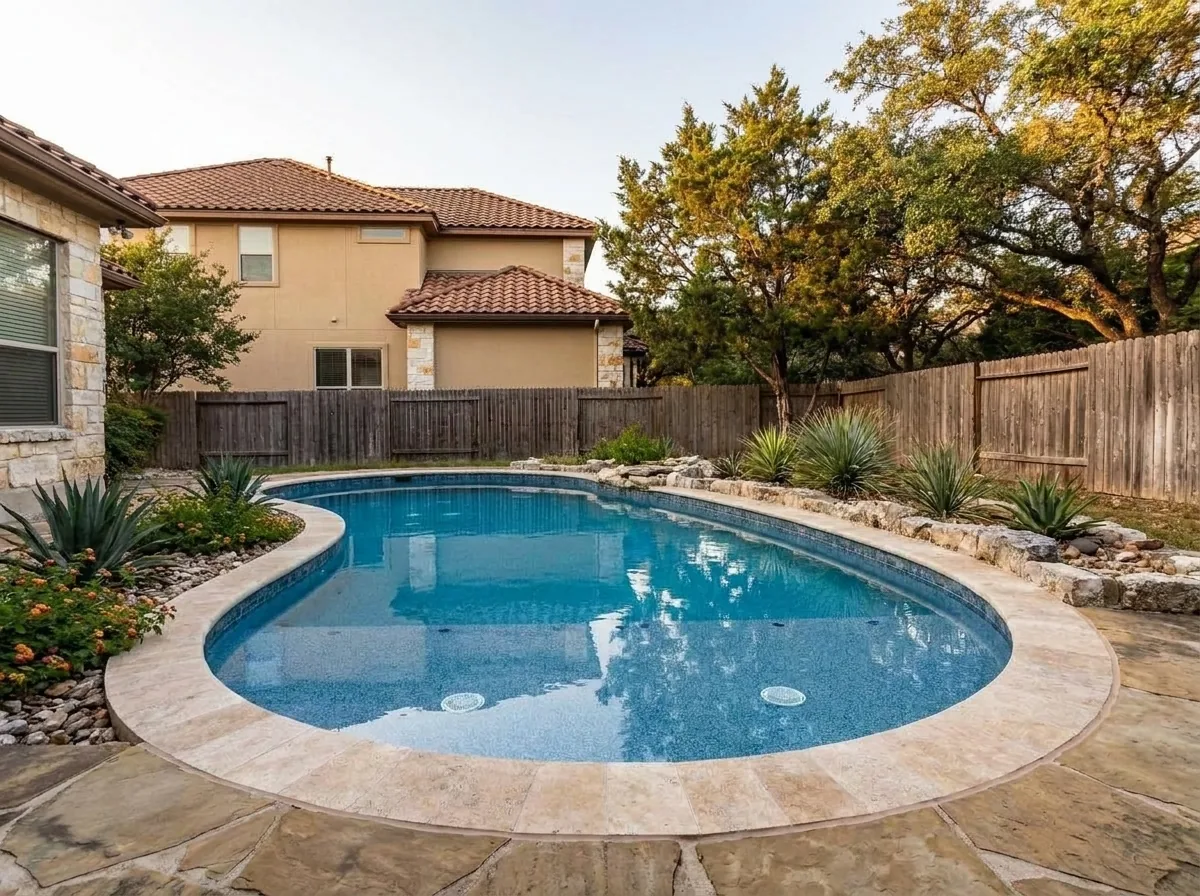
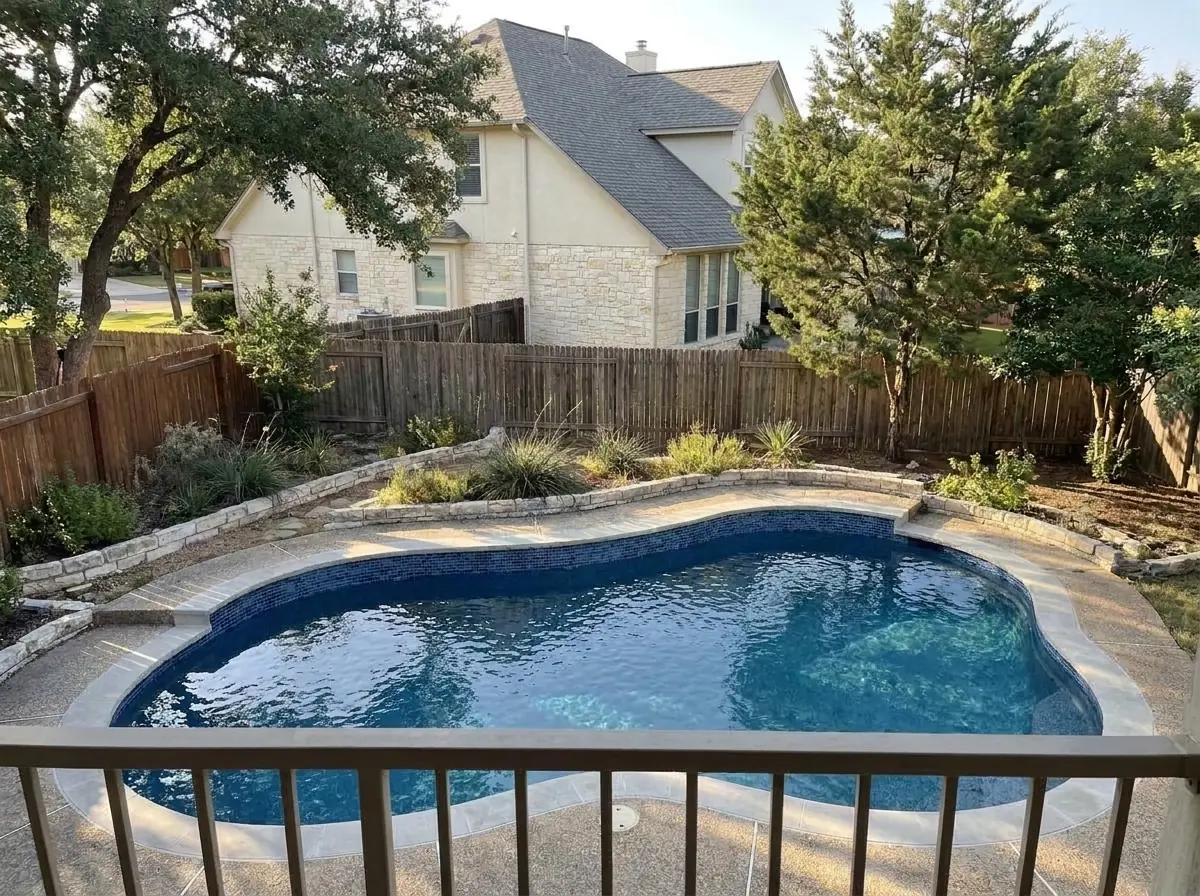
Pool plastering — also called replastering or marcite — is the process of removing a deteriorated interior finish and hand-applying a fresh white cement and marble dust surface to the pool shell. It's the most affordable resurfacing option and a solid choice when the existing plaster is worn but the shell is structurally sound. Most San Antonio pools need replastering every 8–12 years; with hard Edwards Aquifer water and a 9-month swim season, the lower end of that range is common.
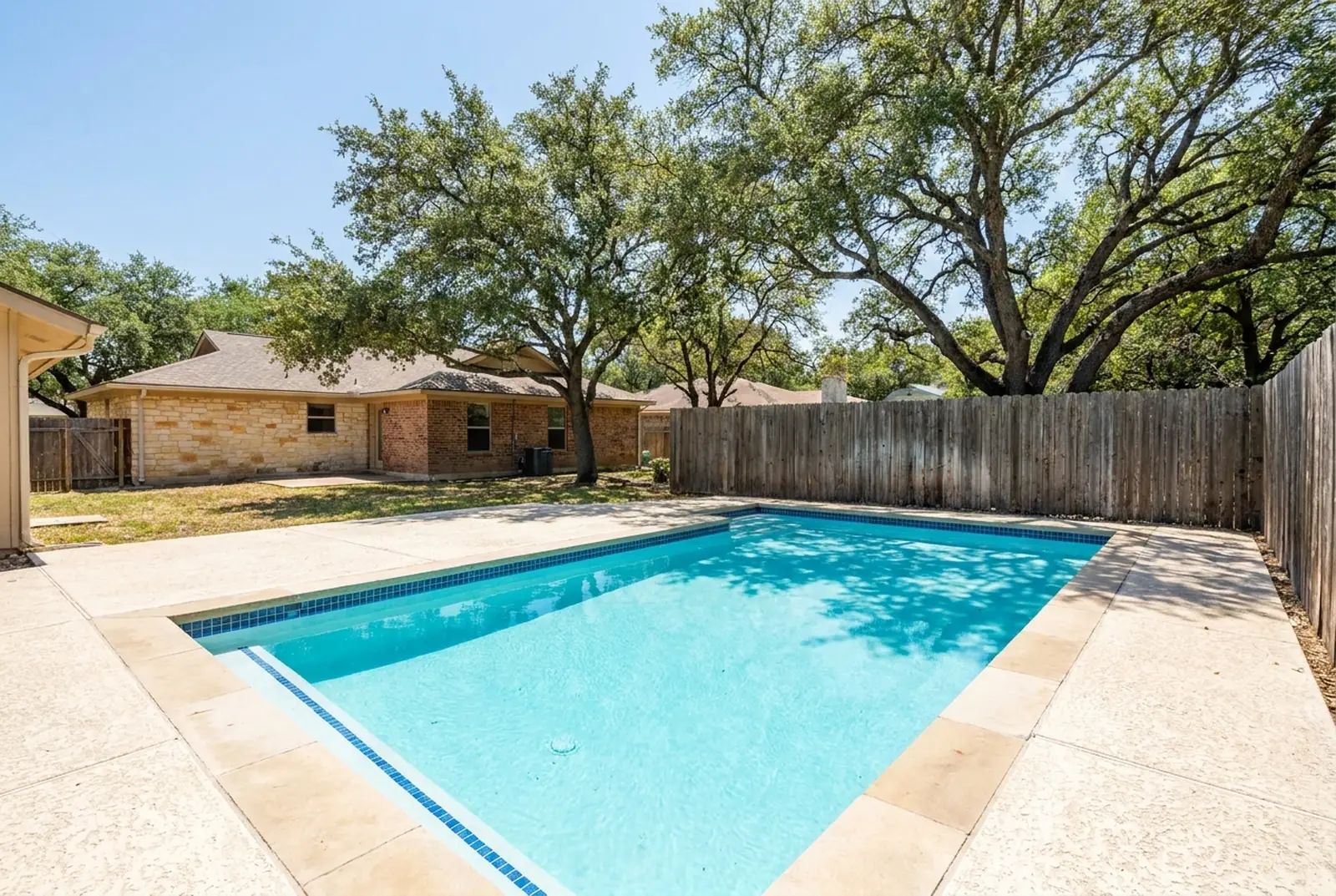
Is It Time?
Plaster that's reached end of life doesn't announce itself dramatically — it degrades in ways that most homeowners attribute to chemistry problems first. Here are the real signs the plaster itself needs to go:
When plaster erodes, the rough calcium silicate aggregate underneath is exposed. This scratches skin, tears swimsuits, and indicates the smooth protective layer is gone. Chemistry won't fix this.
Calcium scaling, metal staining, and embedded algae all cause plaster to discolor. When stains return within a week of cleaning, the plaster has absorbed contaminants at depth — it needs replacement.
Plaster chips are the most urgent sign. They travel through the pump and filter, adding wear to equipment. If your filter basket is catching white chips, it's time to call.
Porous, degraded plaster absorbs sanitizer instead of resisting it. If your chemical spend has crept up over the past 1–2 seasons with no obvious cause, the surface is likely the culprit.
San Antonio's alkaline water (calcium hardness 200–350 mg/L from the Edwards Aquifer) accelerates plaster degradation faster than softer-water markets. A pool that lasts 12 years in Austin can need replastering in 8–9 here if chemistry isn't closely managed.
Our Process
We inspect your pool shell, assess surface degradation, check for structural cracks, and provide a detailed written quote including all recommended work. Always free, always on-site.
The pool is drained and old plaster is chipped or blasted to bare concrete. All existing cracks are cleaned and repaired before new plaster goes on — skipping this step is the single biggest cause of premature replastering failure.
The shell is acid washed or treated with bonding agents to ensure permanent adhesion. This step is non-negotiable — a surface that doesn't bond correctly will delaminate within a few years.
Our experienced plasterers hand-trowel the mix to a consistent 3/8"–1/2" thickness across the entire surface — floors, walls, steps, benches, and curved transitions. Uniform thickness is what separates a 10-year plaster job from a 6-year one.
The pool is filled immediately after application. A 7–10 day startup protocol begins: daily brushing and careful water balance management calibrated for San Antonio's hard water. This is the most critical phase — it determines the long-term health of the new surface.
What You Get
Investment
Pool replastering in San Antonio typically runs $5,000 to $8,500 for a standard residential pool. What drives cost in either direction: pool size (surface area), the extent of crack repair needed, and whether you choose standard white, colored, or an upgraded modified plaster blend. Larger pools and those needing significant structural prep run toward the higher end. The estimate is free, so the range just sets expectations before we see it.
Common Questions
If you're on a budget or selling within 5 years, plaster is a solid choice. If you're staying in the home and want the lowest lifetime cost of ownership, quartz or pebble aggregate lasts twice as long and handles San Antonio's hard water better. We'll give you an honest recommendation at the estimate — we don't push upgrades for the sake of it.
White plaster lasts 8–12 years with proper chemistry maintenance. San Antonio's hard water (high calcium hardness from the Edwards Aquifer) accelerates scale deposits on plaster, so monitoring calcium hardness (200–400 mg/L) and pH (7.2–7.6) throughout the plaster's life is important. Neglect those numbers and you'll be replastering in 5–7 years.
Most plastering jobs run 5–8 days: 1–2 days for drain, demo, and crack repair; 1 day for application; 3–5 days for fill and startup chemistry. You can't rush the startup phase — cutting corners here is how new plaster develops staining and etching within a year.
Not during the work itself. We need access to utilities at the start of the job and we'll walk you through the startup protocol when we fill the pool. Beyond that, you don't need to be present.
 Alamo Pool